Facility manager's guide · Dallas-Fort Worth
Micro Market Services for Employee Break Rooms
A practical guide for DFW facility managers evaluating micro market services for employee break rooms — how they differ from traditional vending, what site requirements to plan for, and how to move from a tired vending machine to a modern, 24/7 on-site amenity.
What a micro market really is
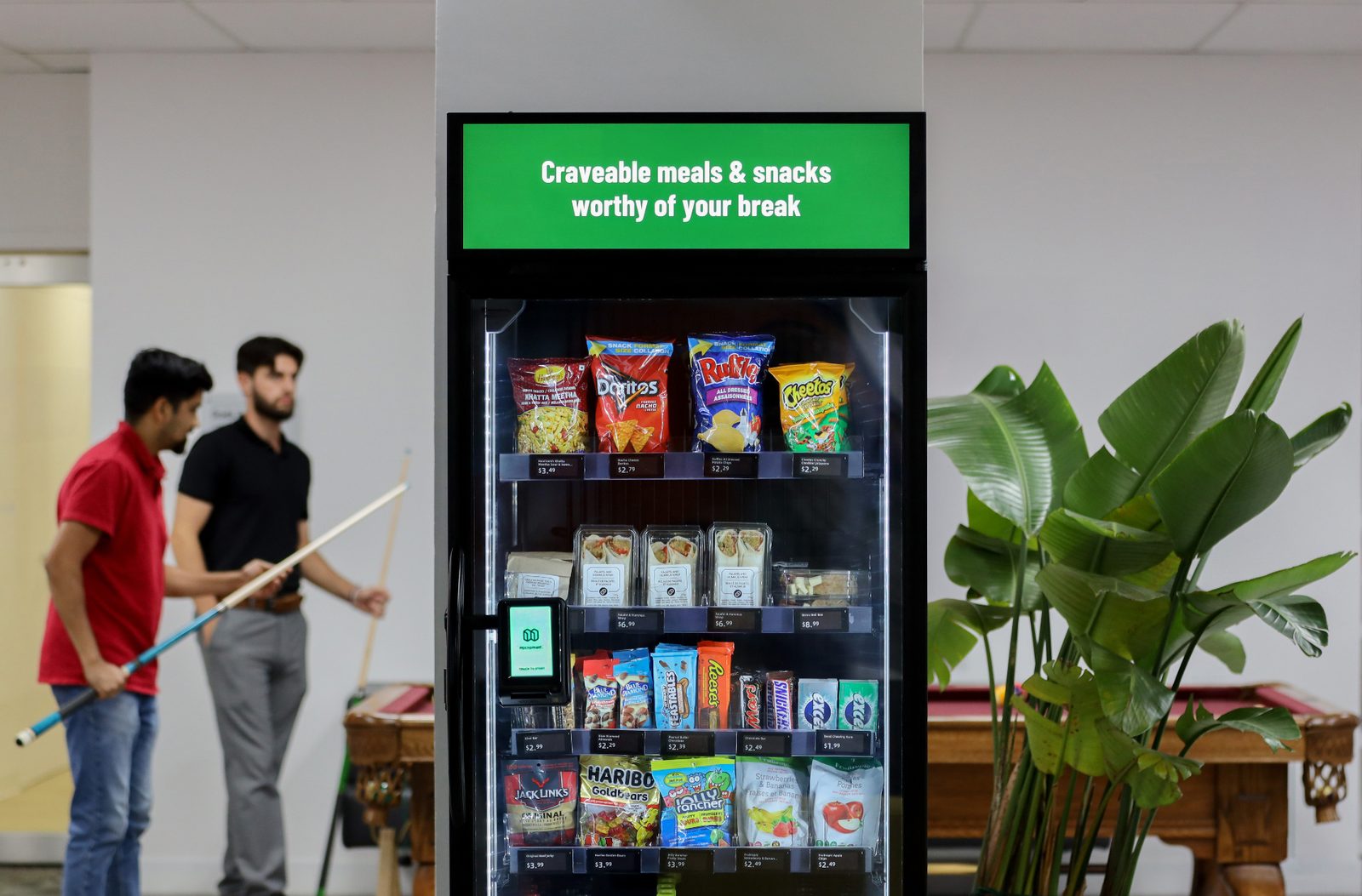
A break room micro market is a small, unattended retail space — usually 60 to 150 square feet — with open coolers, freezers, and shelves that employees browse freely and pay for at a self-checkout kiosk or through an AI "just walk out" cooler. There is no cashier, no coils, and no glass between the person and the product. The operator (like Flyby Vending) owns the equipment, stocks it, cleans it, and monitors it remotely. For the facility team, it looks and behaves like a permanent on-site amenity that runs itself.
The distinction matters because "micro market services" is not a bigger vending machine — it's a different operating model. You're not renting a box; you're hosting a retail footprint that your team can shape around headcount, shift patterns, and food preferences.
Why offices are moving off traditional vending
Traditional vending machines were designed for a world of quarters and packaged snacks. They still work for low-traffic corners, but for a modern office break room they leave real money and morale on the table:
- Fresh food is impossible. Coils crush sandwiches and can't hold produce, so lunch options top out at chips and candy.
- One item per transaction. Buying a drink, a snack, and a protein bar takes three separate card swipes.
- Break rooms feel dated. A single scuffed vending machine signals "utility" — a stocked micro market signals "amenity" to employees and recruits.
- No real product mix. ~30–45 SKUs behind glass vs. 150+ SKUs across ambient, refrigerated, and frozen zones in a micro market.
The typical trigger for a switch is either a lease event (renovation, expansion, new HQ) or the moment a facility manager realizes their office is losing an hour of productivity every day to off-site lunch runs.
Site requirements at a glance
Most Dallas-Fort Worth office break rooms already meet these — but the checklist is worth walking through before you commit to a layout.
Space planning
Micro markets are modular, so the right footprint depends on how many people you're feeding and what they want at 10 a.m. and 1 p.m. A useful way to scope it:
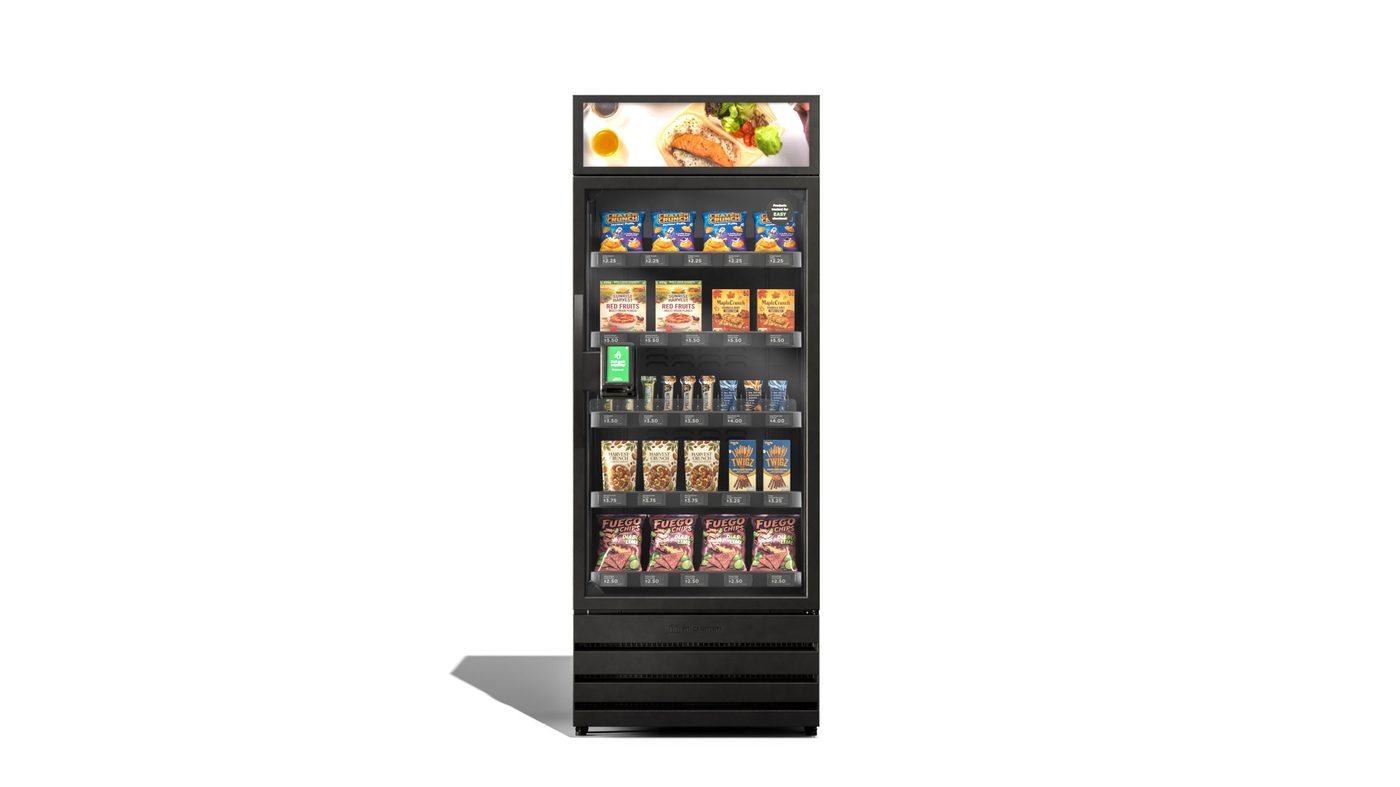
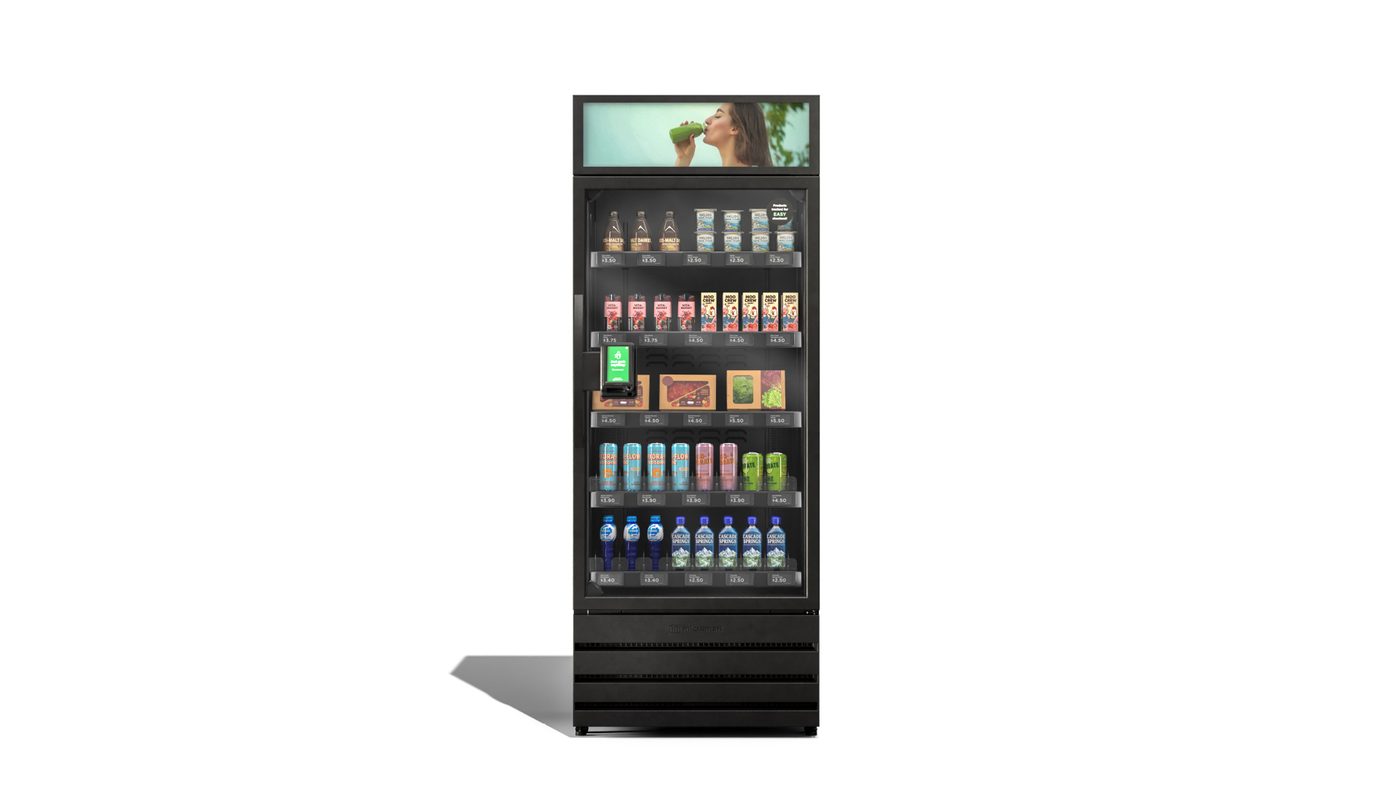
- Compact (~60 sq ft): one AI-powered cooler + a snack shelf. Fits 50–100 employees who mostly want drinks and grab-and-go snacks.
- Standard (~90 sq ft): two coolers (one drink, one fresh food) + snack shelving + tap kiosk. Fits 100–200 employees who expect lunch options.
- Full-service (~120–150 sq ft): combo cooler + freezer + snack wall + self-checkout kiosk. Fits 200+ employees, multiple shifts, or 24/7 access.
You don't have to commit to full-service on day one. Most Flyby Vending deployments start standard and expand once we see actual purchase patterns.
Power & connectivity
The two questions that trip up more break-room projects than anything else are "will the breaker hold?" and "will the internet reach?" Both are usually easy fixes if you plan for them.
- Outlets: plan for one dedicated 120V/20A outlet per cooler or freezer. Sharing a circuit with a microwave is a common cause of nuisance trips.
- Wired Ethernet preferred: AI "just walk out" coolers stream video and telemetry — a wired drop makes uptime a non-issue.
- Wi-Fi is fine if you can guarantee a strong signal at the equipment location and put the market on a stable SSID (not a guest network that recycles credentials).
- Payments: tap-to-pay, mobile wallet, and the "just walk out" checkout all ride the same network — no separate merchant line needed.
The rollout process
For qualifying DFW sites, most facility managers go from first call to a stocked, running micro market in two to three weeks.
- 1
Qualification call (15 min)
We confirm headcount, hours, and whether the site clears the 50+ employee threshold.
- 2
Site walk (on-site or via photos)
Measure the break room, check outlets and network, and pick a layout.
- 3
Proposal in 24 hours
Equipment mix, product assortment, pricing model, and install timing.
- 4
Install (typically 1 day)
Equipment is delivered, plugged in, connected, and initially stocked.
- 5
Ongoing service
Weekly restocks, remote monitoring, planogram tweaks based on what actually sells.
Why DFW is a strong market for micro market services
Dallas-Fort Worth has one of the densest concentrations of mid-size office campuses in the country: corporate HQs in Plano and Irving, distribution and logistics in Coppell and Farmers Branch, professional services in Fort Worth and Arlington, and fast-growing tech and healthcare footprints in Dallas and Carrollton. Employees expect break rooms that match the caliber of the building — and traditional vending simply doesn't clear that bar anymore.
Flyby Vending currently services offices, apartments, warehouses, gyms, and commercial properties across Dallas, Plano, Fort Worth, Arlington, Irving, Coppell, Farmers Branch, and Carrollton. Local service means same-week installs, next-day restocks when a product moves faster than expected, and an operations team that can walk your site instead of ticket it.
If you're a facility manager comparing micro market services for an employee break room in the DFW metroplex, the shortest path to a real answer is a 15-minute qualification call. If your headcount and space check out, the placement is free.
Frequently asked questions
What are micro market services for employee break rooms?
Micro market services replace traditional vending with an unattended, self-checkout mini convenience store inside the break room. A provider installs open coolers, freezers, and shelving, then handles stocking, cleaning, remote monitoring, and payments — so employees get fresh food, snacks, and drinks 24/7 with no on-site staff required.
How much space does an office micro market need?
A functional office micro market fits in roughly 60–150 square feet. A small footprint (~60 sq ft) supports one AI cooler and a snack shelf; a full-service layout (~120–150 sq ft) adds a freezer, additional coolers, and a self-checkout kiosk.
What power and connectivity does a micro market require?
Most micro markets need two to four standard 120V/20A dedicated outlets (one per cooler/freezer), plus reliable internet — either wired Ethernet or strong Wi-Fi. AI-powered coolers stream telemetry and payment data continuously, so a stable connection is required.
Do employees pay or does the company subsidize it?
Either works. Most DFW offices run the market as a paid amenity where employees pay via tap, mobile wallet, or a "just walk out" AI cooler. Some employers subsidize a percentage of every purchase or offer credits — the provider configures this at the payment layer.
How many employees do you need to justify a micro market?
A good rule of thumb is 50+ on-site employees per day. Below that, a smart vending machine usually makes more sense; above it, a micro market drives 2–3× higher engagement per user because shoppers can browse and buy multiple items in one trip.
See if your DFW office qualifies for a free micro market
Flyby Vending places Micromart AI coolers and smart stores at no cost for Dallas-Fort Worth sites with 50+ on-site employees. Get a proposal in 24 hours.