Buyer\u2019s guide
Vending vs. office pantry service
Same break room. Very different bills. Here\u2019s a clear look at paid vending, subsidized micro markets, and fully employer-paid pantry service \u2014 and how to pick the one your team will actually use.
The short answer
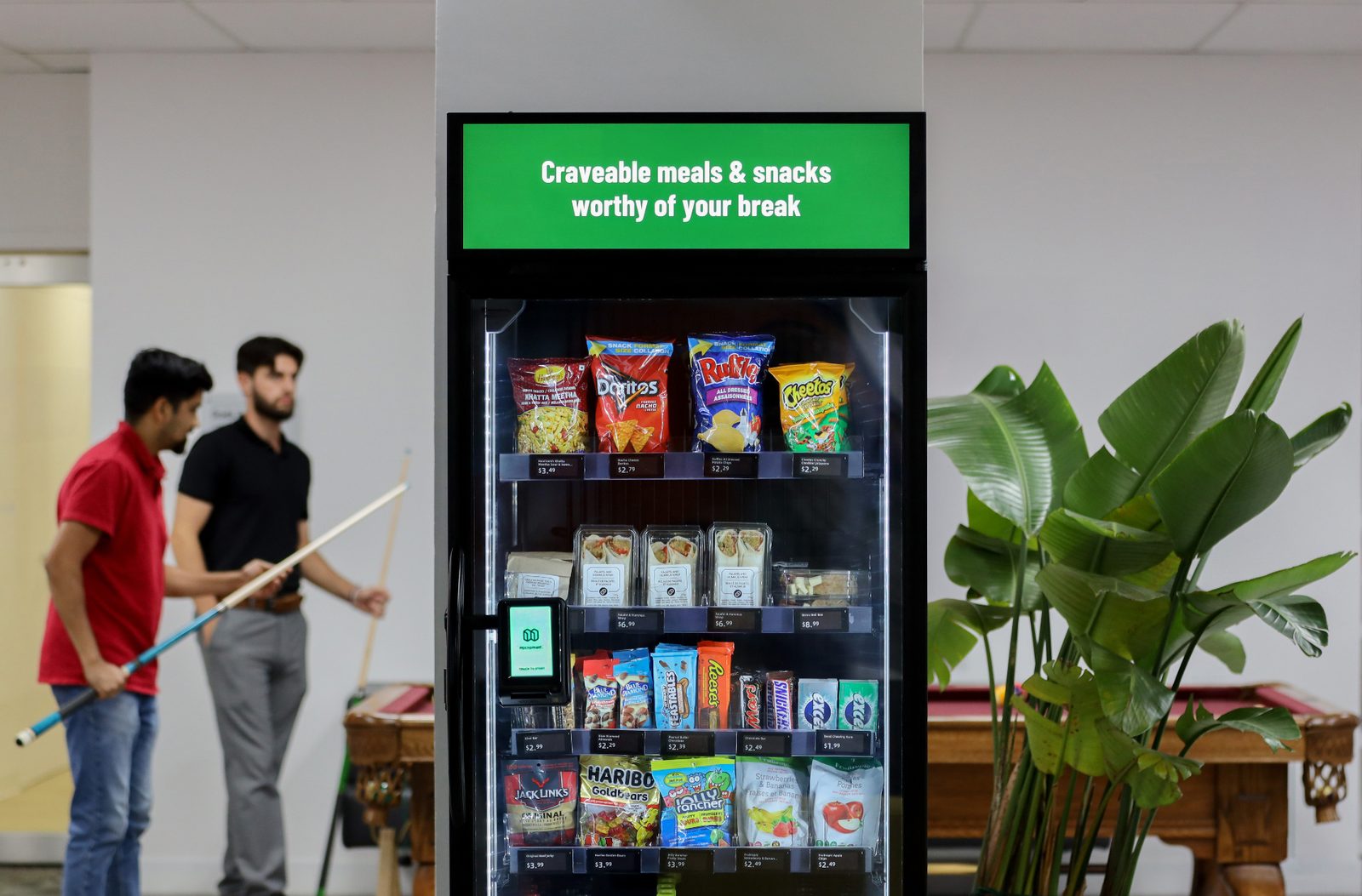
If cost matters most, keep it paid vending or a paid micro market — the employer pays nothing and staff still gets a real amenity. If you want a measurable culture lift and can budget for it, a subsidized micro market gives you the most control per dollar. Full employer-paid pantry service is powerful but really only pencils out when free food is core to how you recruit or retain.
Side-by-side comparison
Ranges are typical DFW figures across Flyby placements; actuals depend on headcount, product mix, and subsidy design.
When each model wins
Paid vending / micro market
- Cost sensitivity is high or budgets are frozen.
- Staff have decent nearby options and just want a backup.
- Warehouse, industrial, or 24/7 shift environments.
- Multifamily and mixed-tenant amenity spaces.
Subsidized micro market
- 50\u2013500 people on site and food is a real friction point.
- You want a measurable perk without unlimited exposure.
- Hybrid schedules \u2014 subsidy only fires when people show up.
- You want data on what your team actually consumes.
Full pantry service
- Free food is part of your recruiting story.
- Executive teams, sales floors, or client-facing spaces.
- Sub-100 headcount where usage is predictable.
- You accept some waste in exchange for culture upside.
Frequently asked questions
What is office pantry service?
Office pantry service is an employer-paid program where snacks, drinks, and sometimes fresh food are stocked on open shelves and in coolers for employees to take for free. The company pays the operator per delivery or per employee per month.
How is that different from vending or a micro market?
A vending machine or micro market is paid by the end user at the point of purchase. A pantry is paid by the employer up front, so employees grab items with no checkout at all. A subsidized micro market splits the difference: employees still tap to check out, but the employer applies a credit or discount.
Which model is cheapest for the employer?
Pure vending is cheapest — usually zero cost. Subsidized micro markets add a controllable per-transaction subsidy. Full pantry service is the most expensive but delivers the strongest culture signal and highest usage.
Can we mix models?
Yes. Many DFW offices run a paid Micromart for everyday snacks and drinks, then layer in employer-paid coffee, water, or a Friday fresh-food credit. Flyby configures the mix per site.
What size office does pantry service make sense for?
Fully employer-paid pantry usually pencils out at 25–150 people where the culture signal is worth the monthly spend. Above that, subsidized micro markets tend to give a better cost-per-employee experience because usage patterns are more predictable.
Not sure which model fits your office?
Tell us your headcount and hours. We\u2019ll come back with a specific recommendation \u2014 including whether a no-cost Micromart is the right starting point.